Showing posts with label Artists of Influence. Show all posts

Thursday, January 30, 2014

John Byrne - Comic Book Artist and Writer


John Byrne is a British-born comic-book writer and artist of comic books. Since the mid-1970s, Byrne has worked on many major American superheroes.

Byrne's better-known work has been on Marvel Comics’ X-Men and Fantastic Four and the 1986 relaunch of DC Comics’ Superman franchise. Coming into the comics profession exclusively as a penciler, Byrne began co-plotting the X-Men comics during his tenure on them, and launched his writing career in earnest with Fantastic Four (where he started inking his own pencils). During the 1990s he produced a number of creator-owned works, including Next Men and Danger Unlimited. He scripted the first issues of Mike Mignola's Hellboy series and produced a number of Star Trek comics for IDW Publishing.

Art style

Promotional art for Blood of the Demon #1, a series which was written and drawn by Byrne for DC Comics.

Byrne has himself called the straight line "his least favorite artistic element".

Ron Goulart has called Byrne’s artwork "an eminently acceptable mix of bravura, complexity and storytelling clarity".

In Scott McCloud’s book Understanding Comics, Byrne is charted along with other comics artists in the "Big Triangle". McCloud’s placement of Byrne within it identifies his style as similar to Gilbert Hernandez and Jim Lee, making the point that Byrne’s line style is naturalistic without being overly detailed.

Byrne is color blind for a narrow range of green and brown tones. During the first year that Byrne illustrated Iron Fist, he believed that the protagonist's costume was brown. While he experimented with his own hand-developed lettering fonts in the early 1980s, he has since begun using a computer font based on the handwriting of the letterer Jack Morelli.

Byrne’s artistic style, his layouts and his storytelling have been sources of instruction and inspiration to many comics artists, including Todd McFarlane and Bryan Hitch.

Read More: http://en.wikipedia.org/wiki/John_Byrne_(comics)

=============================================

Man of Steel #1 (1986) by John Byrne

========================== 


Alpha Flight #3 by John Byrne

============================================  

Check out more John Byrne art and comic book covers at: 

***************************


Tuesday, August 6, 2013

Andy Warhol – Artist, Filmmaker and Photographer

Andy Warhol (August 6, 1928 – February 22, 1987) was an American artist who was a leading figure in the visual art movement known as pop art. His works explore the relationship between artistic expression, celebrity culture and advertisement that flourished by the 1960s. After a successful career as a commercial illustrator, Warhol became a renowned and sometimes controversial artist. The Andy Warhol Museum in his native city, Pittsburgh, Pennsylvania, holds an extensive permanent collection of art and archives. It is the largest museum in the United States dedicated to a single artist.

Warhol's art encompassed many forms of media, including hand drawing, painting, printmaking, photography, silk screening, sculpture, film, and music. He was also a pioneer in computer-generated art using Amiga computers that were introduced in 1984, two years before his death. He founded Interview Magazine and was the author of numerous books, including The Philosophy of Andy Warhol and Popism: The Warhol Sixties. He is also notable as a gay man who lived openly as such before the gay liberation movement. His studio, The Factory, was a famous gathering place that brought together distinguished intellectuals, drag queens, playwrights, Bohemian street people, Hollywood celebrities, and wealthy patrons.

Warhol has been the subject of numerous retrospective exhibitions, books, and feature and documentary films. He coined the widely used expression "15 minutes of fame". Many of his creations are very collectible and highly valuable. The highest price ever paid for a Warhol painting is US$100 million for a 1963 canvas titled Eight Elvises. The private transaction was reported in a 2009 article in The Economist, which described Warhol as the "bellwether of the art market". Warhol's works include some of the most expensive paintings ever sold.

Read More: http://en.wikipedia.org/wiki/Andy_Warhol

===================================

Andy Warhol - The Complete Picture (2002) (VIDEO)  
http://www.youtube.com/watch?v=s0pPttTbR9Y


 =====================================


Wednesday, May 8, 2013

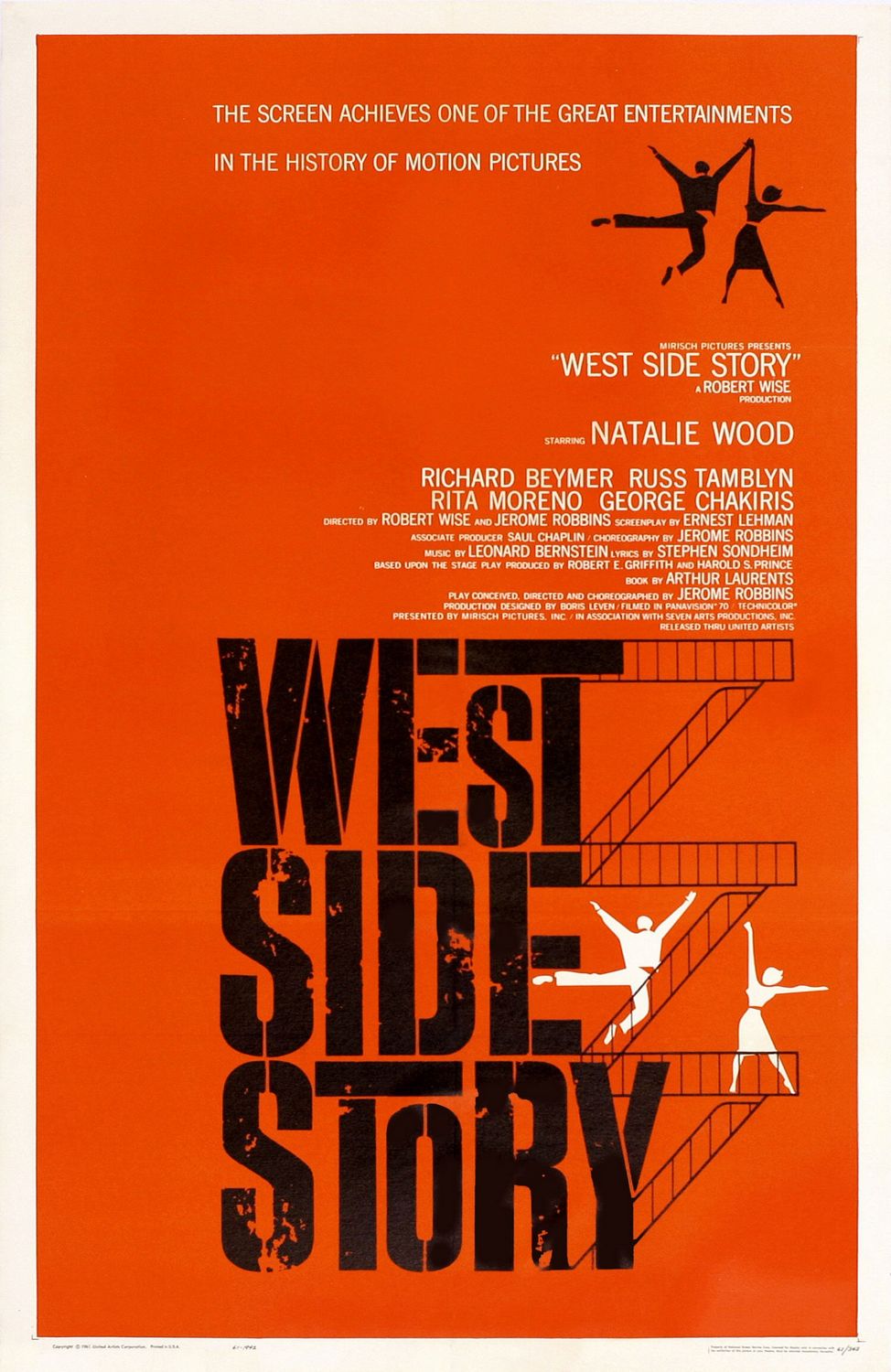
Saul Bass - Graphic Designer and Filmmaker


Saul Bass (May 8, 1920 – April 25, 1996) was an American graphic designer and Oscar winning filmmaker, best known for his design of motion picture title sequences, film posters, and corporate logos.

During his 40-year career Bass worked for some of Hollywood's most prominent filmmakers, including Alfred Hitchcock, Otto Preminger, Billy Wilder, Stanley Kubrick and Martin Scorsese. Among his most famous title sequences are the animated paper cut-out of a heroin addict's arm for Preminger's The Man with the Golden Arm, the credits racing up and down what eventually becomes a high-angle shot of a skyscraper in Hitchcock's North by Northwest, and the disjointed text that races together and apart in Psycho.

Bass designed some of the most iconic corporate logos in North America, including the AT&T "bell" logo in 1969, as well as AT&T's "globe" logo in 1983 after the breakup of the Bell System. He also designed Continental Airlines' 1968 "jetstream" logo and United Airlines' 1974 "tulip" logo which became some of the most recognized airline industry logos of the era.


Personal Note: Saul Bass was not only a graphic designer of posters, corporate logos and movie title sequences. He was a visionary, an innovator and trailblazer. Every logo he designed, I remember as a child. The title sequences to his movies are not just legendary but are truly epic. He was and forever will be one of the greatest artists of The 20th Century.  - Torrence King

==============================================

 Saul Bass - Advice to Design Students  


 =========================================== 

 Saul Bass - On Making Money vs Quality Work 


 ================================================ 

 Why Man Creates - Directed by Saul Bass 

  ===================================================== 

 Title sequence of “North by Northwest” by Saul Bass  


 =================================================== 

 Title Sequence for Hitchcock's 'Psycho' by Saul Bass  


 ===========================================


============================================== 


Wednesday, February 8, 2012

Artist Profile: Norman Rockwell (1894-1978)

Norman Percevel Rockwell (February 3, 1894 – November 8, 1978) was a 20th-century American painter and illustrator. His works enjoy a broad popular appeal in the United States for their reflection of American culture. Rockwell is most famous for the cover illustrations of everyday life scenarios he created for The Saturday Evening Post magazine for more than four decades.[1] Among the best-known of Rockwell's works are the Willie Gillis series, Rosie the Riveter (although his Rosie was reproduced less than others of the day), Saying Grace (1951), The Problem We All Live With, and the Four Freedoms series. He is also noted for his work for the Boy Scouts of America (BSA); producing covers for their publication Boys' Life, calendars, and other illustrations.

In 1943, during the Second World War, Rockwell painted the Four Freedoms series, which was completed in seven months and resulted in his losing 15 pounds. The series was inspired by a speech by Franklin D. Roosevelt, in which he described four principles for universal rights: Freedom from Want, Freedom of Speech, Freedom to Worship, and Freedom from Fear. The paintings were published in 1943 by The Saturday Evening Post. The United States Department of the Treasury later promoted war bonds by exhibiting the originals in 16 cities. Rockwell himself considered "Freedom of Speech" to be the best of the four. That same year a fire in his studio destroyed numerous original paintings, costumes, and props.

Shortly after the war, Rockwell was contacted by writer Elliott Caplin, brother of cartoonist Al Capp, with the suggestion that the three of them should make a daily comic strip together, with Caplin and his brother writing and Rockwell drawing. King Features Syndicate is reported to have promised a $1,000/week deal, knowing that a Capp-Rockwell collaboration would gain strong public interest. However, the project was ultimately aborted as it turned out that Rockwell, known for his perfectionism as an artist, could not deliver material as fast as required of him for a daily comic strip.

During the late 1940s, Norman Rockwell spent the winter months as artist-in-residence at Otis College of Art and Design. Students occasionally were models for his Saturday Evening Post covers. In 1949, Rockwell donated an original Post cover, "April Fool," to be raffled off in a library fund raiser.

In 1959, his wife Mary died unexpectedly, and Rockwell took time off from his work to grieve. It was during this break that he and his son Thomas produced his autobiography, My Adventures as an Illustrator, which was published in 1960. The Post printed excerpts from this book in eight consecutive issues, the first containing Rockwell's famous Triple Self-Portrait.

Read More: http://en.wikipedia.org/wiki/Norman_Rockwell

========================================


Tuesday, January 31, 2012

Artist Profile: Alex Ross

Nelson Alexander "Alex" Ross (born January 22, 1970) is an American comic book writer/artist known primarily for his painted interiors, covers and design work. He first rose to fame with the 1994 miniseries Marvels, on which he collaborated with writer Kurt Busiek for Marvel Comics. He has since done a variety of projects for both Marvel and DC Comics, such as the 1996 miniseries Kingdom Come, which Ross also co-wrote. Since then he has also done covers and character designs for Kurt Busiek's series, Astro City, and various projects for Dynamite Entertainment. His feature film work includes concept and narrative art for Spider-Man and Spider-Man 2, and DVD packaging art for the M. Night Shyamalan film, Unbreakable. He has also done covers for TV Guide, promotional artwork for the Academy Awards, packaging design for comic book tie-in video games, and his renditions of superheroes have been merchandised as action figures.

Ross' style has been said to exhibit "a Norman-Rockwell-meets-George-Pérez vibe", and has been praised for its realistic, human depictions of classic comic book characters. His rendering style, his attention to detail, and the perceived tendency of his characters to be depicted staring off into the distance in cover images has been satirized in Mad magazine. Because of the time is takes Ross to produce his art, he primarily serves as a plotter and/or cover artist. Comics Buyer's Guide Senior Editor Maggie Thompson, commenting on that publication's retirement of the Favorite Painter award from their CBG Fan Awards due to Ross' domination of that category, stated in 2010, "Ross may simply be the field's Favorite Painter, period. That's despite the fact that many outstanding painters are at work in today's comic books."

Read More: http://en.wikipedia.org/wiki/Alex_Ross
====================================

====================================


Artist Profile: Jackson Pollock

Paul Jackson Pollock (January 28, 1912 – August 11, 1956), known as Jackson Pollock, was an influential American painter and a major figure in the abstract expressionist movement.

During his lifetime, Pollock enjoyed considerable fame and notoriety. He was regarded as a mostly reclusive artist. He had a volatile personality, and struggled with alcoholism for most of his life. In 1945, he married the artist Lee Krasner, who became an important influence on his career and on his legacy.

Pollock died at the age of 44 in an alcohol-related car accident. In December 1956, the year of his death, he was given a memorial retrospective exhibition at the Museum of Modern Art (MoMA) in New York City, and a larger more comprehensive exhibition there in 1967. More recently, in 1998 and 1999, his work was honored with large-scale retrospective exhibitions at MoMA and at The Tate in London.

In 2000, Pollock was the subject of an Academy Award–winning film Pollock directed by and starring Ed Harris.


=================================

VIDEO: Pollock painting (1950)

It will work better using a SMALL SCREEN FORMAT. A fragment (going on a loop) of the film of Jackson Pollock painting - shot by Hans Namuth (1950) and released as "Jackson Pollock 51" (1951). Sound is not synchronous. Available (with another short clip and a text transcript of Pollock's comments) at http://www.nga.gov/feature/pollock/process3qt.shtm


====================================

Pollock (2000) Trailer – Biographical Film starring: Ed Harris (Jackson Pollock) and Marcia Gay Harden (Lee Krasner) - http://www.youtube.com/watch?v=z0xiovbDML0


=====================================


Sunday, January 8, 2012

Profile: Boris Vallejo - Artist and Painter

Boris Vallejo (born January 8, 1941) is a Peruvian-born American painter. He immigrated to the United States in 1964, and he currently resides in Allentown, Pennsylvania. He frequently works with Julie Bell, his wife, painter, and model.

Vallejo works almost exclusively in the fantasy and erotica genres. His hyper-representational paintings have graced the covers of dozens of science fiction paperbacks and are featured in a series of best-selling glossy calendars. Subjects of his paintings are typically Sword and sorcery gods, monsters, and well-muscled male and female barbarians engaged in battle. Some of his male figures were modeled by Vallejo himself, and many of his later female characters were modeled by his wife. His latest works still retain heavy fantasy elements, but lean more towards the erotic rather than pure fantasy themes.

Vallejo has been named as the artist guest of honor at Renovation, the 69th World Science Fiction Convention.


======================================================


 =========================================


Friday, June 24, 2011

Artist Profile: Gene Colan

Eugene "Gene" Colan (September 1, 1926 – June 23, 2011) was an American comic book artist best known for his work for Marvel Comics, where his signature titles include the superhero series, Daredevil, the cult-hit satiric series Howard the Duck, and The Tomb of Dracula, considered one of comics' classic horror series. For the Tomb of Dracula series, he co-created the Blade character with scriptwriter Marv Wolfman. The character went on to star in a series of films starring actor Wesley Snipes. He also co-created the Falcon. Blade and the Falcon were two of the first African-American superheroes in mainstream comics.

Colan was inducted into the Will Eisner Comic Book Hall of Fame in 2005.

He began working in comics in 1944, doing illustrations for publisher Fiction House's aviation-adventure series Wings Comics. "[J]ust a summertime job before I went into the service", it gave Colan his first published work, the one-page "Wing Tips" non-fiction filler "P-51B Mustang" (issue #52, Dec. 1944). His first comics story was a seven-page "Clipper Kirk" feature in the following month's issue.

After attempting to enlist in the U.S. Marine Corps during World War II but being pulled out by his father "because I was underage", Colan at "18 or 19" enlisted in the Army Air Corps. Originally scheduled for gunnery school in Boulder, Colorado, plans changed with the war's sudden end. After training at an Army camp near Biloxi, Mississippi, he joined the occupation forces in the Philippines. There Colan rose to the rank of corporal, drew for the Manila Times, and won an art contest.

Upon his return to civilian life in 1946, Colan went to work for Marvel Comics' 1940s precursor, Timely Comics. He recalled in 2000,

"I was living with my parents. I worked very hard on a war story, about seven or eight pages long, and I did all the lettering myself, I inked it myself, I even had a wash effect over it. I did everything I could do, and I brought it over to Timely. What you had to do in those days was go to the candy store, pick up a comic book, and look in the back to see where it was published. Most of them were published in Manhattan, they would tell you the address, and you'd simply go down and make an appointment to go down and see the art director". Al Sulman, listed in Timely mastheads then as an "editorial associate", "gave me my break. I went up there, and he came out and met me in the waiting room, looked at my work, and said, 'Sit here for a minute'. And he brought the work in, and disappeared for about 10 minutes or so... then came back out and said, 'Come with me'. That's how I met [editor-in-chief] Stan [Lee]. Just like that, and I had a job".


VIDEO: A Conversation with Gene Colan Comicology.TV

Saturday, April 30, 2011

Profile: William Blake (1757-1827) – Visionary Artist and Poet

Tyger! Tyger! burning bright
In the forests of the night,
What immortal hand or eye
Could frame thy fearful symmetry?

William Blake (November 28, 1757 – August 12, 1827) was an English poet, painter, and printmaker. Largely unrecognized during his lifetime, Blake is now considered a seminal figure in the history of both the poetry and visual arts of the Romantic Age. His prophetic poetry has been said to form "what is in proportion to its merits the least read body of poetry in the English language". His visual artistry has led one contemporary art critic to proclaim him "far and away the greatest artist Britain has ever produced". Although he lived in London his entire life except for three years spent in Felpham, he produced a diverse and symbolically rich corpus, which embraced the imagination as "the body of God", or "Human existence itself".

Considered mad by contemporaries for his idiosyncratic views, Blake is held in high regard by later critics for his expressiveness and creativity, and for the philosophical and mystical undercurrents within his work. His paintings and poetry have been characterized as part of both the Romantic movement and "Pre-Romantic", for its large appearance in the 18th century. Reverent of the Bible but hostile to the Church of England - indeed, to all forms of organized religion - Blake was influenced by the ideals and ambitions of the French and American revolutions, as well as by such thinkers as Jakob Böhme and Emanuel Swedenborg.

Despite these known influences, the singularity of Blake's work makes him difficult to classify. The 19th century scholar William Rossetti characterized Blake as a "glorious luminary," and as "a man not forestalled by predecessors, nor to be classed with contemporaries, nor to be replaced by known or readily surmizable successors."


============================

VIDEO: William Blake - Images and Art


==============================

VIDEO: William Blake by Daniel Amos from the album “Vox Humana”


======================================

THE TYGER (from Songs Of Experience)

By William Blake

Tyger! Tyger! burning bright
In the forests of the night,
What immortal hand or eye
Could frame thy fearful symmetry?

In what distant deeps or skies
Burnt the fire of thine eyes?
On what wings dare he aspire?
What the hand dare sieze the fire?

And what shoulder, & what art.
Could twist the sinews of thy heart?
And when thy heart began to beat,
What dread hand? & what dread feet?

What the hammer? what the chain?
In what furnace was thy brain?
What the anvil? what dread grasp
Dare its deadly terrors clasp?

When the stars threw down their spears,
And watered heaven with their tears,
Did he smile his work to see?
Did he who made the Lamb make thee?

Tyger! Tyger! burning bright
In the forests of the night,
What immortal hand or eye
Dare frame thy fearful symmetry?

1794

Tuesday, April 19, 2011

Profile: The Cure - Alternative Rock Pioneers

The Cure are an English rock band formed in Crawley, West Sussex in 1976. The band has experienced several line-up changes, with frontman, vocalist, guitarist and principal songwriter Robert Smith being the only constant member. The Cure first began releasing music in the late 1970s with their debut album Three Imaginary Boys (1979); this, along with several early singles, placed the band as part of the post-punk and New Wave movements that had sprung up in the wake of the punk rock revolution in the United Kingdom. During the early 1980s, the band's increasingly dark and tormented music helped form the gothic rock genre.

After the release of Pornography (1982), the band's future was uncertain and Smith was keen to move past the gloomy reputation his band had acquired. With the 1982 single "Let's Go to Bed" Smith began to inject more of a pop sensibility into the band's music. The Cure's popularity increased as the decade wore on, especially in the United States where the songs "Just Like Heaven", "Lovesong" and "Friday I'm in Love" entered the Billboard Hot 100 chart. By the start of the 1990s, The Cure were one of the most popular alternative rock bands in the world. The band is estimated to have sold 27 million albums as of 2004. The Cure have released thirteen studio albums and over thirty singles during the course of their career.

The first incarnation of what became The Cure was The Obelisk, a band formed by students at Notre Dame Middle School in Crawley, Sussex. The band made their public debut in a one-off performance in April 1973, and featured Robert Smith (piano), Michael "Mick" Dempsey (guitar), Laurence "Lol" Tolhurst (percussion), Marc Ceccagno (lead guitar) and Alan Hill (bass guitar). The first real incarnation though came in January 1976 when Ceccagno formed Malice with Smith and Dempsey along with two other classmates from St. Wilfrid's Catholic Comprehensive School, with Ceccagno on lead, Smith now also on guitar and Dempsey switching to bass. Ceccagno soon left, however, to form a jazz-rock fusion band called Amulet. Increasingly influenced by the emergence of punk rock, Malice's remaining members became known as Easy Cure in January 1977. By this time, Smith and Dempsey had been joined by Lol Tolhurst from The Obelisk on drums, and new lead guitarist Porl Thompson. Both Malice and Easy Cure also trialled several unsuccessful vocalists before Smith finally assumed the role of Easy Cure's front man in September 1977.

That year, Easy Cure won a talent competition with German label Hansa Records, and received a recording contract. Although the band recorded tracks for the company, none were ever released. Following disagreements in March 1978 over the direction the band should take, the contract with Hansa was dissolved. Smith later recalled, "We were very young. They just thought they could turn us into a teen group. They actually wanted us to do cover versions and we always refused." Thompson was dropped from the band in May, and the remaining trio (Smith/Tolhurst/Dempsey) were soon renamed The Cure by Smith. Later that month the band recorded their first sessions as a trio at Chestnut Studios in Sussex, which were distributed as a demo tape to a dozen major record labels. The demo found its way to Polydor Records scout Chris Parry, who signed The Cure to his newly formed Fiction label—distributed by Polydor—in September 1978. However, as a stopgap while Fiction finalised distribution arrangements with Polydor, in December 1978 The Cure released their debut single "Killing an Arab" on the Small Wonder label. "Killing an Arab" garnered both acclaim and controversy: while the single's provocative title led to accusations of racism, the song is actually based on French existentialist Albert Camus' novel The Stranger. The band placed a sticker label that denied the racist connotations on the single's 1979 reissue on Fiction. An early NME article on the band wrote that The Cure "are like a breath of fresh suburban air on the capital's smog-ridden pub and club circuit" and noted "With a John Peel session and more extensive London gigging on their immediate agenda, it remains to be seen whether or not The Cure can retain their refreshing joie de vivre."


CLICK HERE TO READ MORE ABOUT THE CURE

++++++++++++++++++++++++++++++++++++++++++++

The Story of The Cure - Part 1


++++++++++++++++++++++++++++++++++++++++++++++++

The Story of The Cure - Part 2
http://www.youtube.com/watch?v=xItrYST9c7U


++++++++++++++++++++++++++++++++++++++++++++++

The Cure - A Forest (Live in Japan 1984)


+++++++++++++++++++++++++++++++++++++

The Cure - 'Boys Don't Cry' Live on Jools Holland


++++++++++++++++++++++++++++++++++++++


Sunday, February 27, 2011

Favorite Oscar Nominated Movies 2011

Here is my list of Favorite Oscar Nominated Movies that were posted on my Facebook page throughout the month of February, 2011. Its not a totally complete list of my favorites (which can go on forever). There's so many movies that have been nominated throughout the years that are some of my favorites and then there are those I have yet to see. But I chose this list because they are some that I have watched more than once and continue to enjoy. Next time, I'm sure to have another list of great movies and commentary prepared that will added to this one.

========================================

Citizen Kane (1941) - A TRIBUTE TO CITIZEN KANE

Quite arguably, the greatest film of all time. It is the equivalent to the works of Shakespeare by which all modern writers owe a debt, “Citizen Kane” is the measure of film to which all modern directors of TV and Film have been influenced directly and indirectly. A film shrouded in controversy, director Orson Welles fought hard to get the film made despite opposition from a variety of enemies including American newspaper magnate William Randolph Hearst, due to the fact the film was a semi-autobiographical take on his life. Hearing about the film being made enraged Hearst so much that he banned any word, review and ads of it in his papers and helped to persuade Hollywood film companies to make an offer to producers, RKO Pictures of $805,000 to destroy all prints of the film and burn the negative. Although Hearst's efforts to suppress it damaged the film's success at the time, the film is now inexorably connected to him. And yet, “Citizen Kane” endures. The first time I watched it was about 20 years ago after years of hearing from some movie fans how great it was. So I rented it, sat down and reminded myself, “OK. This was made in 1941.” With that perspective, I was blown away. I could see how revolutionary, at that time, this film came across. The cinematography was ahead of its time. I recently watched it on TCM a few months back and the restoration on the film looks great! I could even see clearly the reflection of one character’s face on a wood desk! If you have not seen the film itself, I would suggest you check it out. Most of all the movies and films that have been produced since its release can be traced to this highly recommended original. – Torrence King


=============================================

It's A Wonderful Life (1946)

“Every time a bell rings, an angel gets his wings.” - “Hee Haw!” - “Strange, isn't it? Each man's life touches so many other lives. When he isn't around he leaves an awful hole, doesn't he?” – These quotes, among others, are as timeless as the movie itself.

“It’s A Wonderful Life” was not as well received when it was released due to high production costs and stiff competition in 1946. It was also nominated for five Oscars without winning any. But, for some reason, in its re-release and countless airings on the then-new technology of television, it started to develop a life of its own and touching the hearts of many for generations to come. It is one of my favorite movies of all time and one of the few I know every bit of dialogue. Also, most of the humor in the film never gets old. It reminds me so much of an extended “Twilight Zone” episode with a little bit of heartfelt comedy and “Citizen Kane” thrown in for good measure with a more redemptive outcome for the main character. And, of course, who can forget the performances of James Stewart, Donna Reed, Lionel Barrymore, Thomas Mitchell and Henry Travers and the magic of directing by Frank Capra. Quite possibly, along with “The Wizard of Oz”, the most widely enduring film of all time. – Torrence King


=======================================

The Last Emperor (1987)

One of the great films from the 1980's. The true story of the last Emperor of China, a man born into a world where he is absolute ruler over all around him but a twist of fate and the tides of war lead to his eventual fall. – Torrence King


=================================

Million Dollar Baby (2004)

“Girlie, tough ain’t enough.” In my opinion, “Million Dollar Baby” is the best motion picture in the purest form of the medium produced during the past decade. I watched this expecting a “Cinderella” story on par with “Rocky” and every other fighter-down-on-his-luck-turned-champion. What I got was life lessons, deeper truths and a tragic ending. Director Clint Eastwood, who I’ve told friends I “hate” because he keep making great movies I watch and love, crafted yet another work of art. Eastwood continues to change our expectations for most of his movies produced during the past decade and “Million Dollar Baby” is a crowning achievement (so far) to his current cinematic artistry. The acting and dialogue banter between Eastwood and actress Hilary Swank are both top notch and funny and to carry the movie along are fundamental lessons of a boxer’s methods and life poetically delivered as narration by Morgan Freeman. – Torrence King


=================================

Mutiny on the Bounty (1935) - Trailer

Clark Gable's Fletcher Christian can only stand by so long as Charles Laughton's Captain Bligh mistreatment of officers on the HMS Bounty finally causes him to take action. After seeing this movie, I could care less about its historical accuracy. The acting is superb. Plus, its message of defiance in the midst of injustice resonated with audiences back then and continues to this day. I believe most of us have become a witness to those in leadership positions who let their power go way too far and one person, out of many, that will not stand for it any longer. – Torrence King


========================================

One Flew Over the Cuckoo's Nest (1975)

One of Jack Nicholson's greatest performances. I hadn't seen this since a broadcast of it years ago. Watching it a few months back, its amazing how many guys are in this movie that went on to become icons of TV and film. The matching of wits and wisdom between Nicholson's Randle McMurphy against Nurse Ratched played with subtle evilness by Louise Fletcher, is an engaging mental battle of epic proportions. – Torrence King


===========================================

Saving Private Ryan (1998)

Surprisingly, this film did not win best picture the year it was nominated. That honor went to the less violent and even less impressive "Shakespeare In Love" (Which was OK but compared to this masterpiece...c'mon!) Director Steven Spielberg and company crafted the most realistic view of World War II the world had ever seen. Even I was shaken in the theater and thinking, "Damn, Now This is War!" And, again, Spielberg was snubbed that year. You can literally count how many times he along with Martin Scorsese have been snubbed versus how many times they actual won. ("Goodfellas" anyone?) The realism and popularity of "Saving Private Ryan" eventually led to the production of the equally, if not better, HBO World War II mini-series "Band of Brothers" and "The Pacific" – Torrence King


============================================

Schindler's List - The 1993 American biographical drama film about Oskar Schindler, a German businessman who saved the lives of more than a thousand Polish-Jewish refugees during the Holocaust. - http://www.youtube.com/watch?v=W74jGQ-CDTE

‎"Whoever saves one life, saves the world entire". I came to watching this movie because of the trailers, box office buzz and various scenes I saw on the Academy Awards the year it won the Oscar for Best Picture. When I did finally see it on a 2-tape VHS, afterward, I was a bit numb and tears did form. Director Steven Spielberg put his heart and soul into this film. Using all the techniques of storytelling, movie making and art to craft a testament to how one life can change many lives. Not only do we see how prejudice can drive a society to madness, we also see the scenes behind the darkness and are showed the lives of those who chose to hate versus those who chose to help. Plus, add the heartfelt theme music by John Williams and you have a cinematic masterpiece. – Torrence King


=========================================

Star Wars (1977)

Quite literally the film that changed everything about movies since the time of its release in 1977. Sure there were other science fiction/action movies before like "The War of The Worlds", "The Day The Earth Stood Still" and "2001: A Space Odyssey", but nothing caught the imagination of the mass movie-going audience like "Star Wars" (and have yet to let go). Director George Lucas, took a huge gamble and it paid off. Influenced by classic comics and movies of space adventurers "Buck Rogers" and "Flash Gordon", whose stories relied primarily on the readers and/or viewers own imagination to carry the plot, Lucas created a whole universe of people and places that would surpass the popularity of most mythological and literary characters. The release of the movie in 1977 was at the right time when the future generation of current filmmakers and computer-tech kids would go see it (numerous times and, in a way, studying it over and over) and evenutally go on and create equally important films using the technology and visual effects Lucas and company pioneered. Without "Star Wars" there would be no Pixar's "Toy Story" and other great CGI animated films, "Tron", "Lord of The Rings Trilogy", "Spider-Man" movies, "Superman" movies, "X-Men" movies and the list goes on. – Torrence King


==========================================

A Soldier's Story (1984)

“A Soldier’s Story” is an ensemble acting tour de force. Howard E. Rollins, Jr, Adolph Caesar, Denzel Washington, and William Allen Young all give performances of high caliber. To me, It is part-“Mutiny on The Bounty”, part-“Billy Budd” and part-“Full Metal Jacket” due to the fact it deals with an authoritative figure whose hate and jealousy causes him to treat his subordinates with malice, and especially the one subordinate who is popular with everyone and talented; things that he does not possess. When he is killed, there are complications to the investigation that does not seem to have a clear resolution. A great movie indeed. Plus, you get to see a young Denzel in one of his earliest motion picture roles. A sign on great things to come…. – Torrence King


=========================================

Monday, September 13, 2010

Book Review: Brush With Passion: The Art and Life of Dave Stevens

Book Review: Brush With Passion: The Art and Life of Dave Stevens
Originally posted on Myspace: Sunday, February 22, 2009 _______________________________________
It has been a long time since I’ve written a book review but I’m more than compelled to do so at this late hour with the latest release, Brush with Passion, an excellent tribute and reflection on a great artist and person, Dave Stevens (1955-2008). Well, this is not a typical book review, I must say. Its more or less, a personal take on what I’ve read as well as my personal thoughts on Stevens. Before reading Brush With Passion, my mind went back to the time at the age of 11 when my cousin’s husband, a comic book fan and artist, gave me a set of comic books, mostly all independent publications . Two of them were a couple of Pacific Comics featuring Jack Kirby’s Silver Star and Dave Steven’s The Rocketeer. I thought they were very cool. It was the beginning of a realization that not all comics featuring super-heroes were only about Superman and Spider-Man. Dave Stevens was one of the first artists that I started to study and could recognize his distinctive style. From that point onward, I could spot a Dave Stevens illustration right away.

As the years went on I started to notice Stevens art in comics and pin-ups, especially the illustration he did of golden-age hero The Phantom Lady for DC Comics in their Who’s Who publication, among others. When The Rocketeer movie was scheduled to be released, I seem to be the only one among my friends who knew who “The Rocketeer” was and the guy who created him. I was probably among a “chosen” few who was more excited about it than Terminator 2 which was released around the same time.

Throughout my career, I began to expand my own artistic endeavors, writing poetry and experimenting with different mediums. I would soon find myself illustrating and working with various models, like Stevens, myself. I regret truly not having met Dave. If I had tried harder, I’m sure I could have made some connection. But, like most of us think, we tend to believe some people are untouchable or cannot be reached. I’ve worked with so many people and I’m sure if I had made an effort to contact him, it could have happened. Upon hearing about his death last year along with the young and talented artist Michael Turner, I took both losses pretty hard and have dealt with both emotionally ever since. Not just because they were both very talented artists, but, coming from an understanding of the creative process and the sacrifices made daily, I made my own “creative” connections with them as well as other artists, writers, poets, etc. throughout the years. When they pass on, it seems to take a piece of you with them. Its funny, but I felt more connected with them and saddened by their lost than my own father and my older half-brother who passed away in recent years. This feeling of connecting to these artists have always been my way of finding kindred creative souls. Maybe its because my father abandoned me and my sister when I was 6 and having my half-brother, who tried very little to be a brother to me, unable to get pass the issues of his own life fueled the need to connect to artists like myself. And so is the life of many creative souls, trying to connect to the one’s that influence them to create, making stronger connections than any bond of blood. And so goes my reading of Brush With Passion. When I purchased the book, I could feel that I was in for something special. I would have to read it immediately. That night, I turned on the music of the Irish Film Orchestra, playing a variety of suites. When I sat up on my bed with my new reading light, I opened the book to the first page. Within a matter of time, reading a few lines, the tears started to flow. The music didn’t help in stopping the waterworks but it suddenly fit the mood as I began to remember the times I came across various illustrations of Dave Stevens, finally watching the Rocketeer movie, the rumors I read about his depression after its disappointing box office receipts and other things I came to remember about him.

As I read each chapter throughout the week, I was both encouraged as an artist and satisfied with my purchase. One chapter in particular, Dave digs deep in reflecting on his life. He shows that being an artist is so much less glamorous than most would care to admit. And he hits the nail in his points that, like all of us artists, he started with a love for the printed image, the thrill of the sketch and a pursuit to create. Then reality steps in with everything in-between. But, as Stevens came to realize, one must take it all in stride and learn from each experience and work from there. Stevens, though very hard on himself for so long, eventually realized so much in his final years. That there is wisdom that does not come easy….It takes experiences and the inevitable ups-and-downs. I’m am so very grateful to have read “Brush With Passion”, despite the depictions of Africans that was a throwback to the racist illustrations of the 1940s and 1950s that Stevens strongly points out were wrong to portray. 


I feel I got to know Dave Stevens through his words, and his reflections and memories of others. He seemed to be a pretty cool guy. It would have been an honor to have known him but, I know his legacy will live on forever. --- Torrence King
______________________________________
Below is a more detailed review published by greenmanreview.com

Available at: http://www.greenmanreview.com/index2


Dave Stevens (illustrator) and Arnie Fenner & Cathy Fenner (editors), Brush With Passion: The Art and Life of Dave Stevens (Underwood Books, 2008)


Brush With Passion: The Art and Life of Dave Stevens is an utterly gorgeous book. It's also a terribly sad one. This is not just due to the Stevens' untimely passing from hairy cell leukemia, nor is it entirely derived from the shoulda-woulda-coulda success of The Rocketeer. Instead, it comes from the reader's dawning realization that Stevens' autobiographical notes are the ongoing narrative of a man continually defining himself by what he's not -- not a comics artist, not the guy who's going to make a million doing The Rocketeer, not the guy who's going to replace Vargas doing pinups for Playboy, not this, not that. It's not until the very end of his life that Stevens seemingly figured out what he was, or more importantly, what he could be, and the fact that this was never given time to blossom is perhaps the saddest thing of all. But if there is sadness here, there is also beauty and joy. The joy comes from many places: the shared reminiscences of friends and peers like Jim Steranko and Arnie & Cathy Fenner; the pleasure that Stevens clearly took in sharing his influences and history with his audience, the unabashedly good deeds he did in helping out his muse Bettie Page, and more. This book is, after all, a celebration of the man's life as well as his art, and a celebration it is. One gets the sense, reading anecdote after fondly remembered anecdote, of the sheer love that these wildly disparate people all had for Stevens. Peers, employers, friends, lovers -- they all give testimony as to the depth to which Stevens enriched their lives. The last of these, an epilogue by the artist William Stout, is a graceful, hopeful remembrance that brings the story full circle, and which may just invoke a sniffle or two. That leaves the beauty, and there is beauty here a-plenty. The book is exceedingly lavishly illustrated. This is an illustrated life, after all, and the Fenners don't skimp. Everything necessary to telling the story is here, gorgeously reproduced and given detailed captions for explanation. Childhood iconography and family photos are included; so are pencil sketches, full color reproductions, movie storyboards, reference, and more. The end result is a book that is stuffed -- but not overstuffed -- with everything visually pertinent to Dave Stevens' career, both from his work and the world around him that provided his inspiration. It is, of course, the Stevens work that most readers will be eager to see, and that does not disappoint. Those who just know Stevens as “the guy who drew the Rocketeer” are in for a bit of a shock, as the full range of his work is on display here. That includes his non-PC homages, his Tarzan and Rocketeer work, the studies for the never-realized Mimi Rodin project, and most of all, the pinup art. There's lots and lots of it here, which is to say that anyone who opens the book and isn't prepared for an armada of magnificently rendered nude or semi-nude women is going to have a hard time getting past about chapter 8. The art itself is brilliant, unmistakably Stevens even when he was doing homage or rough pencil sketch. I'm no art critic, but even I can see the absolute vibrancy of the material, the energy that comes through in every image. It's clear that Brush With Passion is a labor of love, a lovingly assembled remembrance of a career that provided a great deal of memorable work. How fortunate we are, then, that Dave Stevens had such friends as these who were willing to produce a work like this; how even more fortunate that he was generous enough of spirit to set down his creative journey without excuses or lacunae. For both the sadness and the joy it contains, this book is a treasure of a kind, and well worth the time of anyone with even a passing interest in Stevens' life and work. [Richard Dansky]